


Our Fears in Full Screen
Dernière mise à jour : 13 déc. 2025
Warning: Spoilers of varying degrees ahead for the following movies → Invasion of the Body Snatchers (1956), Godzilla (1954), Psycho (1960), Night of the Living Dead (1968), The Texas Chainsaw Massacre (1974), Halloween (1978), Friday the 13th (1980), A Nightmare on Elm Street (1984), Dawn of the Dead (1978), Paranormal Activity (2007), Get Out (2017), Host (2020).
There is something strange about horror films. We pay to be scared, terrified, to squirm in our seats, and to watch through our fingers things we would run from in reality. But look closer at what hides behind the shadows of the horror genre, and what you’ll find is our own fears, our own anxieties, translated to the big screen.
Horror has always been a distorted mirror showing us society's nightmares. It makes them bearable, or at least watchable. From the cobweb-covered castles of the 1930s to today’s suburban terrors, the genre is not only entertaining, but it also reveals what we are really scared of.
Gothic Castles to Escape Misery
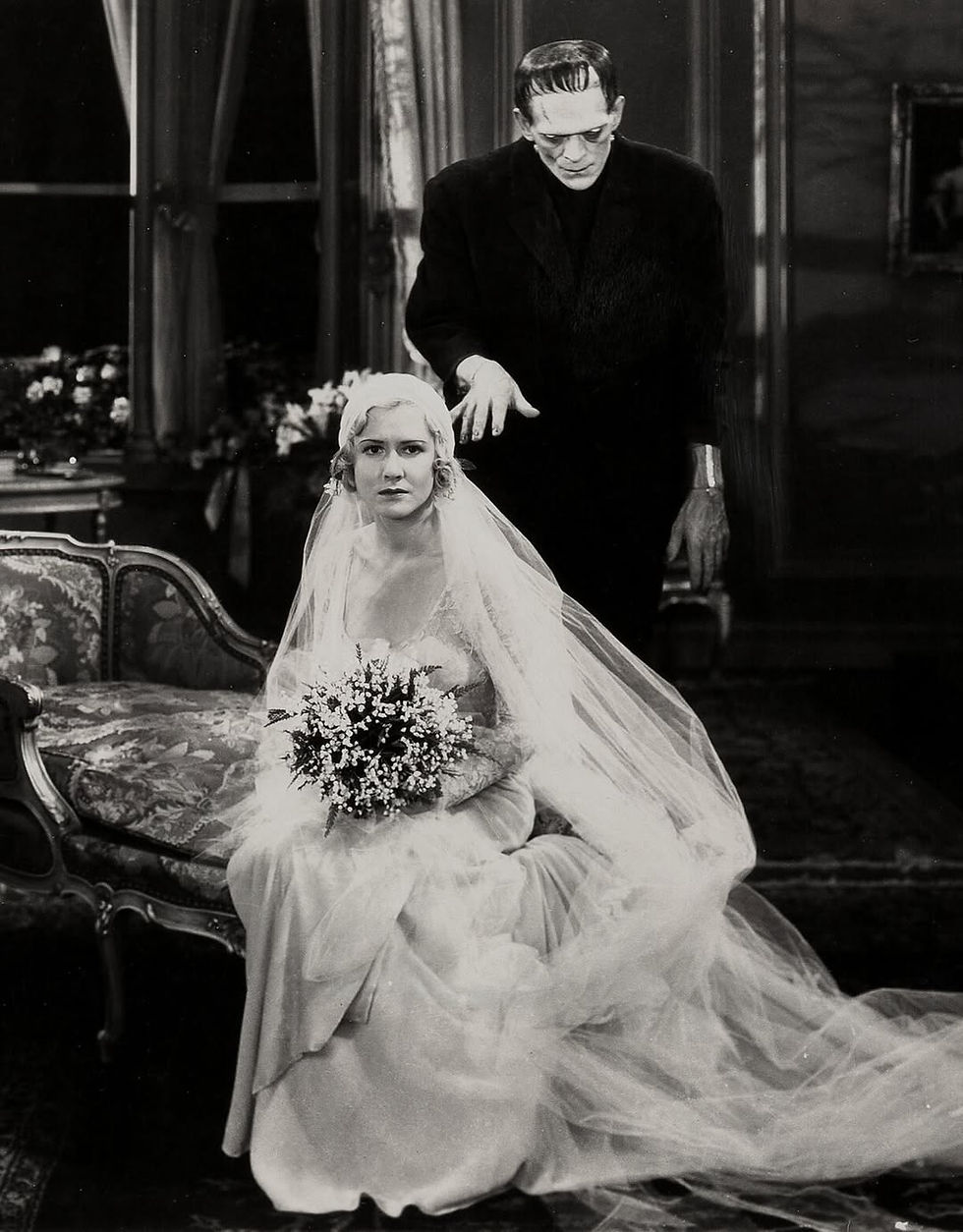
Imagine 1931, the Great Depression. Banks are going bankrupt, unemployment in the United States reaches 16%, and lines for bread stretch around the block. And still, people would scrape together the money to go watch Dracula (1931) or Frankenstein (1931) at the movie theater.
Why would they want to look at monsters when real horrors were everywhere? Because these monsters were contained in the confines of Gothic castles and mad scientist laboratories. For 90 minutes, your problems weren’t your unpaid rent or your unemployment: they were vampires and reanimated corpses.
But the thing is, those monsters weren’t as unfamiliar as they might have seemed. Frankenstein’s creature, portrayed by Boris Karloff, wandering around in badly fitted working-class clothes, looked a lot like millions of people in that same situation. When the angry villagers turned against what they didn’t understand, brandishing pitchforks and torches, the herd mentality felt familiar. Audiences had seen it in the way people turned away from the poor, the immigrants, and all those considered “Other”. The mad scientist, playing God and ignoring consequences, also reveals anxieties about advances in science and technology.
And it is no coincidence that, almost a century later, as artificial intelligence raises existential questions about creation and control, a brand-new, quite popular remake of Frankenstein by director Guillermo del Toro has been released.
The Invasion From Within
Let us fast-forward to the 1950s. By this time, the Great Depression and the Second World War were no longer immediate threats, but new anxieties had arisen: nuclear annihilation and the Red Scare. The horror genre adapted accordingly.
Invasion of the Body Snatchers (1956) held a terror far more insidious than that of Dracula’s fangs or Dr. Frankenstein’s laboratory: that of your neighbors, your friends, and your family members, being replaced by unemotional clones while you sleep. It is no coincidence that this movie came out during McCarthyism, when people in the United States were pushed to fear communism, and suspicion hung in the air. The film’s “pod people” were a great metaphor for the paranoia of the times: the enemy wasn’t coming from outside, but from within, and looked just like us.
Giant monsters mutated by radiation, such as Godzilla (1954), trampled cities, bringing nuclear fears to life in horrifying ways. Alien invasions represented Soviet aggression. And then, Hitchcock’s Psycho (1960) came along to change everything by suggesting that the real monster wasn’t supernatural at all: it was ordinary. It was the shy young man managing a motel on the side of the road. Horror became psychological, personal.
War’s Blood on Film
The Vietnam War brought a new outlook on war for a lot of Americans. For the first time, images of a war’s atrocities were regularly shown on television, which made it increasingly difficult to maintain the illusion of the nobility of this conflict. The horror genre responded with unprecedented brutality.
George A. Romero’s Night of the Living Dead (1968) resembles real war footage, with its grainy, black-and-white cinematography. The zombies appear unstoppable, much like war. But the real shock is the Black protagonist surviving the zombie apocalypse, only to be shot by the police. The movie’s ending speaks volumes about racial violence in the USA.

The Texas Chainsaw Massacre (1974) went further, trapping five teenagers in a nightmare of random and unexplained violence, much like the horrors of war. The movie was instrumental in establishing the slasher craze of the late 1970s and 1980s.
Halloween (1978), Friday the 13th (1980), A Nightmare on Elm Street (1984): all movies where the masked killers walked among normal suburban folk, and where authority figures were utterly useless. These movies reflected nationwide fears: parents unable to protect their kids, evil that wore a mask, and violence that could arise any time, anywhere, and for any reason.
Tom Savini, who had previously served as a combat photographer during the Vietnam War, worked as a prosthetic makeup artist on Romero’s Dawn of the Dead (1978). He brought real-life gore to a movie that turns a shopping mall into a battleground featuring zombies as mindless consumers. The violence carries a sense of authenticity because Savini based the effects on injuries he had witnessed firsthand.
Mirrors of a Moral Crisis
9/11 shifted the horror genre’s focus once again. The mid-2000s gave us “torture porn” like Saw (2004) and Hostel (2005): movies that forced the audience to watch prolonged and graphic suffering. The critique was negative, but the movies raised uncomfortable questions that had to be confronted.
In April 2004, photographs came out showing American soldiers torturing prisoners in Abu Ghraib prison in Iraq. After 9/11, Bush’s administration had authorized waterboarding — an experience similar to drowning — as a valid interrogation method.
These movies weren’t released in a vacuum. They came out at a time when the U.S. government was openly debating whether or not torture was acceptable if the goal was to keep its population safe — raising the question: was America the victim or the torturer?
Meanwhile, Paranormal Activity (2007) turned surveillance into terror. In an era when cameras slowly infiltrated daily life, and privacy was at stake, horror cinema found a new way to remind us that we are always being watched.
Horror Wakes Up
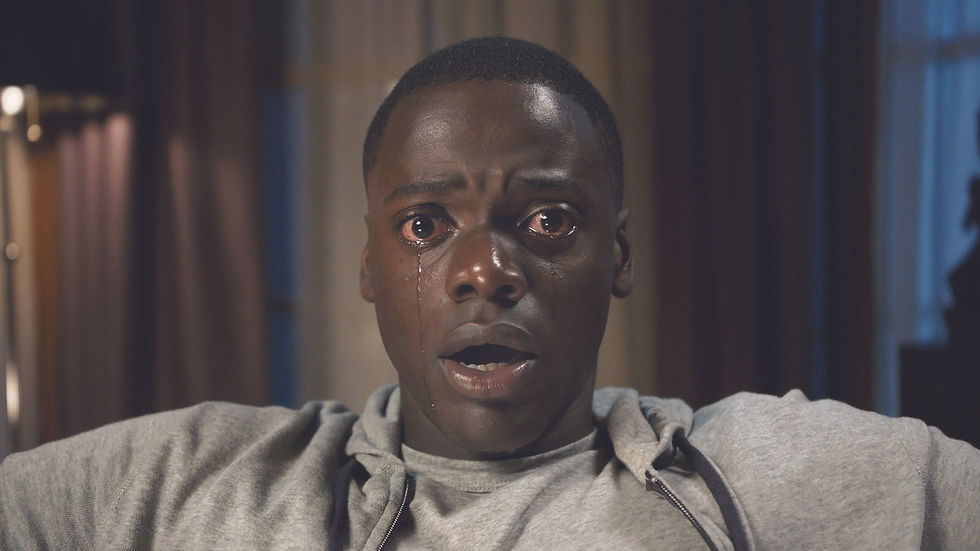
In the 2010s, the genre stopped pushing its social commentary as subtext and put it forward boldly. Jordan Peele’s Get Out (2017) became a phenomenon, as it used horror to dissect racism and the hypocrisy of the liberal left. The “Sunken Place”, where the Black protagonist’s conscience gets trapped while white people control his body, has become synonymous with Black marginalization in the United States. The film’s cleverness lies in the fact that the villains are not redneck bigots, but white progressive liberals who voted for Obama. Twice.
This new wave of horror, sometimes called “elevated horror”, tackles everything. Peele’s Us (2019) explores class division through doppelgangers. Parasite (2019) blends horror and humor to expose wealth inequality. Midsommar (2019) surrounds the criticism of an abusive relationship with the sunshine rays of folk horror. These don’t only scare us; they involve us.
Now, with the COVID-19 pandemic, the horror movies on isolation and infection have proliferated. Host (2020), which was filmed entirely via Zoom during quarantine, turned our daily video calls into nightmares; meanwhile, Sick (2022) — from the same writer as Scream (1996) — actually used a quarantine setting as a deathtrap. Quarantine horror became somewhat of a trend after the pandemic.
Why do we keep watching?
Here’s the paradox: horror comforts us by scaring us. It takes the amorphous anxieties surrounding us, such as economic collapse, political paranoia, and social concerns, and gives them shape. It gives them a face and a story that we can see to the end.
Horror takes the fears we can barely articulate and makes them visible, tangible, and survivable, at least for the duration of a movie. The monsters change with each generation, taking the shape of their particular fears. Still, their goal is the same: show us what we are really scared of when the lights are out. And judging by the state of the world, the genre will not run out of material any time soon.
Commentaires