


The end of history did not happen in Compton
Dernière mise à jour : 18 mai
Hip-hop, the post-Cold War vacuum, the OJ verdict
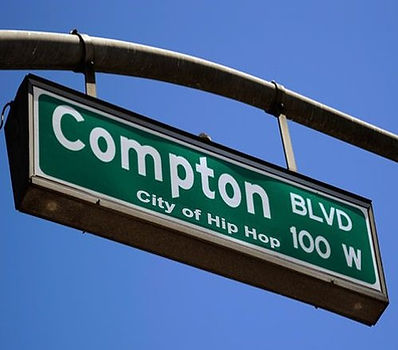
The fall of the Soviet Union in 1991 restructured the entire planet. The United States became the sole superpower, capitalism won by default, and the whole cultural euphoria of the decade flowed directly from this. Without it, none of the 90s' cultural confidence would have existed. Yet within that confidence lived an underlying, unexamined anxiety: what does a culture do when it runs out of enemies?
The euphoria and its underside
When Francis Fukuyama published The End of History¹ in 1992, he was articulating something that the Western cultural apparatus had already begun to perform with extraordinary enthusiasm.
Capitalism, deprived of its structural antagonist, expanded not only economically but semiotically, filling every available surface with signs of its own triumph. Logomania. The logo became the dominant vernacular of the decade.
A Nike swoosh or a Tommy Hilfiger logo is, on the surface, just a brand. But in the 90s, wearing them meant something more: success, arrival, proof that the system worked. The logo had stopped being just a logo — it had become a statement about the world. Roland Barthes calls this mythology² — the process by which a simple sign absorbs a whole ideology and starts presenting it as natural. Tommy Hilfiger on the chest, Nike on the tongue, the Nasdaq on the ticker: these were more than just products circulating through the economy. They were a civilization telling itself, with suspicious haste, that it had won.
Yet beneath this jubilation, the cultural field was profoundly disoriented. The prosperity, the technological optimism, the Clinton-era assumption that politics had shifted from ideological conflict to mere administration — projecting influence through culture and soft power rather than through military or political confrontation — all of this presented itself as the natural order of things. However, beneath that naturalization, a generation was forming its consciousness in conditions that the official narrative of triumph conspicuously failed to address — deindustrialization, racialized poverty, the persistence of structural violence in American cities. The euphoria was real.
The street responds

It is within this context that, between 1991 and 1996, hip-hop appeared as a signifying practice that actively refused the decade's dominant mythology.
Dick Hebdige, drawing on Volosinov, showed that identical objects carry "differently oriented accents" depending on who deploys them and against what social backdrop — which is to say, the "sign becomes the arena of class struggle."³
Dr. Dre's The Chronic, released in November 1992, constituted precisely such a reorientation of the sign. The album appropriated the materials of capitalist triumph with remarkable deliberateness — the luxury car, the leisure, the entrepreneurial persona. Yet it deployed these signs within a spatial and social context — South Central, Compton, the LAPD⁴, the persistent afterlife of Rodney King⁵ — that systematically refused their naturalization as universal affluence.
Both hip-hop and grunge emerged simultaneously as forms of cultural refusal. And that very simultaneity makes the comparison instructive, because despite their structural differences — including origin and community — the contrast between the two illustrates what was specific to hip-hop's challenge to the dominant mythology. Grunge's refusal was, at its core, existential rather than political; it lacked a named adversary, a specific grievance beyond the generalized nausea of a generation that had inherited a victory it had not chosen.Hip-hop, notwithstanding its own commercial ambitions, carried within it a specific historical memory and a specific accusation.
The mythology of the post-Cold War boom was not addressing Compton. Compton was addressing the mythology.
The OJ verdict

Barthes demonstrates in Mythologies that a single image carries within it a first-order denotation and a second-order mythological charge that effectively colonizes the first.⁶
No single moment in the decade revealed the structural fault line beneath the myth of victory with greater clarity than the conclusion of the OJ Simpson trial in October 1995. Polls conducted immediately following the acquittal showed approximately 70% of white Americans convinced of Simpson's guilt, and an almost precisely inverse proportion among Black Americans, who saw the proceedings not as one man's culpability but a question of whether the juridical apparatus would, yet again, function as a mechanism of racial exclusion.
The OJ trial was a machine for producing exactly this division at a national scale. The same footage, the same glove, the same verdict — yet two irreconcilable readings, each perfectly coherent within its own ideological frame. What the trial revealed was that the myth of a unified, triumphant America had never, in fact, existed. And the media apparatus of 1995 was structurally committed to presenting the trial as a shared national experience, thereby reproducing at the level of form the very myth that the trial's content was simultaneously demolishing. Hip-hop registered this contradiction with particular acuity; Tupac Shakur's output across 1995 and 1996, for instance, encoded what Hebdige would call "forbidden contents in forbidden forms," making audible a reading of American reality that the dominant media frame was constitutionally unable to accommodate.
Absorption and its limits
The dominant culture had a predictable response to hip-hop's challenge: absorb it. Hebdige identifies two ways this happens: either the subculture gets turned into a sellable product, stripped of its original meaning, or it gets dismissed as deviance or entertainment, harmless and contained. Both happened to hip-hop, and fast. Where punk took roughly three years to lose its edge and become a commodity, The Chronic was influencing the wardrobes of suburban teenagers within eighteen months of its release, in the very cities its lyrics indicted.
But the absorption was never complete. And the reason connects directly to the argument made above: hip-hop's content carried a specific historical accusation — segregation, Rodney King, the prison-industrial complex — aimed precisely at the mythology that the dominant culture needed to preserve. You can sell a Tupac t-shirt in the mall. You cannot so easily neutralize what the shirt's face once argued in verse.
What the victory concealed
The nineties, viewed through the analytical instruments that Barthes and Hebdige bequeath us, resolve into something considerably more ambiguous than their dominant mythology insists. The decade's cultural confidence was a second-order sign in Barthes' sense — a historically produced construction presenting itself as the natural outcome of human progress. Yet at its margins, in the signifying practices of hip-hop between 1991 and 1996, in the diagnostic rupture of the OJ verdict, in the persistent fact of Los Angeles — a city that burned in April 1992 after the acquittal of the officers who beat Rodney King, and that continued to bear, long after the flames, the structural conditions that had made the uprising inevitable — the dominant myth was continuously interrupted by what it could not incorporate: the knowledge that the victory had been declared from a specific position, for a specific constituency.
Hip-hop restructured the mainstream around its own aesthetic and political grammar. The street had other accounts to settle. And the decade's most enduring cultural production belongs, without serious contest, to those who understood from the outset that the war had never actually ended — but had merely changed its terms.
Sources & References
¹ Francis Fukuyama, The End of History and the Last Man (New York: Free Press, 1992). Fukuyama argued that liberal democracy represented the final form of human government — that ideological history, in effect, was over.
² Roland Barthes, Mythologies (Paris: Éditions du Seuil, 1957; English translation, London: Paladin, 1972). Barthes describes mythology as the process by which historically produced ideas are made to appear natural and inevitable — the second order of meaning through which ideology disguises itself as common sense.
³ Dick Hebdige, Subculture: The Meaning of Style (London: Methuen, 1979), p. 17, drawing on Valentin Volosinov, Marxism and the Philosophy of Language (Leningrad, 1929; English translation, New York: Seminar Press, 1973). For Volosinov, the sign is never neutral — it is always contested terrain between competing social interests.
⁴ The Los Angeles Police Department had a documented history of systematic brutality toward Black residents, most visibly exposed by the 1991 beating of Rodney King, captured on video and broadcast nationally.
⁵ Rodney King was a Black motorist beaten by LAPD officers in March 1991. The acquittal of the officers in April 1992 triggered the Los Angeles uprising, which resulted in over 50 deaths and approximately $1 billion in damages — the most destructive urban uprising in American history since 1967.
⁶ Barthes, Mythologies, op. cit. The first-order meaning is the literal content of a sign — what it depicts. The second-order meaning is the ideological charge it carries — what it implies about the world beyond what it literally shows. It is at this second level that mythology operates, naturalizing a particular vision of reality by making it appear simply descriptive.
Commentaires